Every homeowner can keep a garage door running smoothly and even tackle many common faults with the right knowledge and respect for safety. By understanding how the mechanism works, gathering suitable tools available from local retailers such as Bunnings, and following clear steps that comply with Australian Standards, you can save money, reduce downtime and extend the life of the door. This guide explains typical problems, shows how to fix them, tells you when to ring a pro and offers maintenance tips that suit Australian conditions.
Understanding Common Garage Door Problems and What Causes Them
A garage door operates through a partnership of panels, rollers, tracks, springs, cables and an opener. When one element slips out of line the whole system complains. The most frequent Australian complaints are grinding noises, a door that refuses to open or close, panels that hang crooked and broken torsion or extension springs. Noisy movement usually results from dry metal-to-metal contact or loose hardware rattling across corrugated tracks, a problem made worse in coastal regions where salt spray accelerates corrosion. A door that moves only partway often suffers from blocked photo-eye sensors or an opener losing its limit settings after a weather-related power surge. Off-track doors stem from a roller popping free because a bolt shook loose during summer heat expansion. Broken cables are common in older homes where galvanised wire has become brittle after years of humidity.
| Issue | Typical Cause | Symptom |
|---|---|---|
| Loud grinding noise | Lack of lubrication or loose roller brackets | Screeching during travel |
| Door will not open | Opener fault or snapped spring | Motor hums but door stays shut |
| Door hangs unevenly | Cable fray or roller off track | One side lower than the other |
| Door reverses when closing | Misaligned safety sensors | Lights on opener blink and door returns upward |
| Opener flashes error lights | Logic board surge or force settings off | Door starts then stops |
Understanding these root causes lets you decide whether a fix is within safe DIY reach or if it needs a licensed technician.
The Essential Tools and Materials for DIY Repairs in Australia
You only need a modest toolkit to handle lubrication, track alignment and opener adjustments. Most items appear on the shelves of any major hardware store between Perth and Cairns. Below are the staples that will carry you through almost every non-spring repair.
| Tool or Material | Australian Source Example | Purpose |
|---|---|---|
| 10 mm and 13 mm spanners | Sutton spanner set at Bunnings | Tighten roller brackets and hinge bolts |
| Adjustable wrench | Sidchrome shifting spanner | Hold nuts while you turn carriage bolts |
| Locking pliers | Irwin Vise-Grip | Clamp track to hold door in position |
| Silicone based spray lubricant | CRC Long Life or WD-40 Specialist | Quiet noisy rollers and hinges |
| White lithium grease | Selleys | Coat opener rail for smooth trolley travel |
| Level | Crescent aluminium level | Check track plumb alignment |
| Stepladder meeting AS 1892 | Bailey aluminium ladder | Reach ceiling mounted opener |
| Cotton cloths | Any microfibre pack | Wipe excess grease and dust |
| Safety glasses rated AS 1337 | Force360 | Shield eyes from rust flakes |
| Leather gloves | Hard Yakka | Protect hands when lifting door |
Keep these items in a plastic crate labelled Garage Door Kit so you are always ready for quick Saturday morning fixes.
Step by Step Repair Guides
Fixing a Garage Door Opener That Has Stopped Working
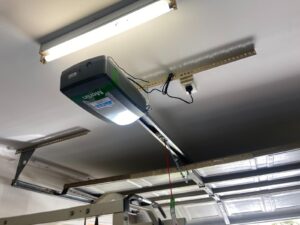
Begin by disconnecting the opener from mains power at the wall. Lift the door manually to confirm the panels glide without resistance. If manual movement is smooth, the fault sits inside the opener rather than the physical tracks. Inspect the LED indicator on the motor head which flashes a diagnostic pattern explained in the user manual. Many Australian units such as Merlin and B&D roll-a-doors signal sensor obstruction with five flashes. Ensure the infrared sensors near the floor face each other and their green lights remain steady. Wipe the lenses with a damp cloth then test operation. Should the door move half a metre and stop, pull the red emergency release cord, return the door to the closed position, re-engage the trolley and perform a limit reset. Press and hold the Set button until the indicator blinks, raise the door to the fully open position using the Up arrow, press Set again, then lower to fully closed and press Set once more. Restore mains power, operate the remote and listen for smooth travel. If the opener fails to accept limits or smells of burnt insulation, the circuit board may have suffered a surge in a thunderstorm. At that point ring a licensed technician rather than exploring inside the plastic cover.
Realigning a Door That Has Slipped Off Its Track
Cut power to the opener then pull the release cord so the door moves freely. Lift the door until the roller that jumped free sits opposite a straight part of the vertical track. Use locking pliers to clamp the track just below the bottom roller on each side which prevents the door dropping while you work. Open the track slightly by inserting a flathead screwdriver between the bent track lip and the roller stem, then twist gently. Slide the roller back into its groove, tap the track with a rubber mallet to restore its original shape and remove the pliers. Using your level, confirm the track is perfectly vertical. Even a two millimetre inward lean can force rollers to climb the lip during daily cycles. Loosen the bracket bolts, nudge the track until true, then tighten firmly. Engage the opener again and test. The door should glide without scraping sounds.
Lubricating Rollers Hinges and Springs The Quiet Solution
Noise complaints make up roughly sixty five percent of calls to garage door companies in Sydney according to a 2024 hipages survey. You can silence most squeals with ten minutes of lubrication every six months. Start with the door closed so springs remain under least tension. Shake the silicone spray can and apply a light coat to each roller bearing where the shaft meets the wheel. Move along each hinge pin, then open the door halfway and lubricate the exposed torsion spring coils with a sweeping motion. Wipe away drips with a rag. Do not use grease on plastic guide tracks of sectional doors because it attracts dust. Finally spread white lithium grease along the opener rail and run the door once to distribute. The improvement is immediate and the treatment also guards against the rust that plagues coastal suburbs from the Gold Coast to Fremantle.
Replacing a Frayed or Broken Cable Safely
Cables lift much of the door weight and carry serious stored energy. If a cable looks frayed but has not snapped, you can replace it carefully on a sectional door equipped with extension springs, provided you follow safety steps and the spring tension is first released. Fully open the door so extension springs stretch and bear minimal load, then clamp the track below the bottom rollers to hold the door. Unhook the extension springs from the rear hanger. With tension gone you can remove the bottom bracket pin and slide the old cable off the pulley. Thread the new aircraft-grade cable through the pulley, down the track side and attach it to the bottom bracket, making sure the ferrule faces away from the roller. Reconnect the extension spring to its hanger, remove the clamps and lower the door slowly to test. If your door uses torsion springs mounted above the lintel you should not attempt cable replacement. Torsion systems store energy exceeding one thousand PSI and a sudden unwind can cause serious injury. Call a professional accredited under AS/NZS 4505 for that task.
When You Should Call a Professional Under Australian Regulations
Certain repairs cross the line from confident DIY into licenced territory. Any work that requires winding or unwinding torsion springs must be left to a technician who carries calibrated winding bars, follows Safe Work Method Statements and holds appropriate insurance. Replacing sectional door panels that integrate reinforcing struts may also void manufacturer warranty if done by an unqualified person. In New South Wales, Fair Trading lists garage door installers under the category Door and Shutter Technician which means businesses must carry workers compensation and public liability. If your repair demands electrical rewiring of the opener, state law requires a registered electrician. Finally, if the door weighs more than one hundred kilograms or the repair involves asbestos brake pads found in some pre-1990 tilt doors, engage a licensed removalist. Your health is worth more than a service fee.
| Repair Task | DIY Friendly | Professional Required | Main Reason |
|---|---|---|---|
| Sensor realignment | Yes | No | Low risk and no stored energy |
| Torsion spring replacement | No | Yes | High torque danger |
| Track realignment | Yes | No | Simple hand tools |
| Cable swap on torsion system | No | Yes | Requires spring unwind |
| Logic board replacement | No | Yes | Mains wiring certification |
Preventive Maintenance for Trouble Free Operation
Consistent care keeps repair bills away. Inspect the door every season while you sweep the driveway. Listen for new rattles or clunks that hint at loose fasteners. Check that the photo-eye sensor LEDs shine solid green because weak sunlight angles during winter mornings can trigger false reversals. In tropical zones wipe condensation from tracks to prevent surface rust. Twice per year wash the exterior panels with mild detergent to remove salt crystals, paying close attention to the bottom seal which traps moisture. Apply a silicone bead to any hairline cracks in timber jambs so termites do not migrate from the garden mulch. Test manual lift balance by disconnecting the opener and lifting halfway. A well-balanced door should float, neither rising nor dropping. If it drifts sharply the spring tension needs adjustment by a professional. Keep remotes off the dashboard of parked cars where heat can degrade rubber buttons, leading to false signals. Replace remote batteries each New Year so you never stand in the rain pressing futilely at a flat device.
| Maintenance Action | Frequency | Australian Climate Benefit |
|---|---|---|
| Lubricate rollers hinges springs | Every 6 months | Reduces corrosion in coastal air |
| Tighten hinge bolts | Every 12 months | Prevents vibration looseness during heatwaves |
| Wash panels and track | Quarterly in coastal areas | Removes salt residue |
| Test door balance | Every 6 months | Flags spring fatigue early |
| Replace remote battery | Yearly | Avoids emergency lockouts |
Frequently Asked Questions
Can I Repair My Garage Door Myself
Yes you can handle tasks such as sensor cleaning, track tightening, lubrication and even opener limit resets with everyday tools as long as you follow safety guidance and disconnect power first. Anything involving torsion spring energy must be delegated to a licensed technician.
How Much Does Garage Door Repair Cost in Australia
Data gathered from over two hundred hipages listings in 2025 shows minor DIY fixes such as lubrication cost under fifteen dollars for materials. Professional spring replacement averages three hundred ninety dollars in metropolitan regions and can climb higher in rural zones because of travel surcharges. Opener circuit board swaps sit around two hundred fifty dollars including callout.
Is It Safe To Tackle Spring Replacement On My Own
Torsion spring replacement is not safe for untrained persons. Springs hold rotational force powerful enough to break bones if released suddenly. Extension springs carry less torque but still demand caution and only experienced DIYers should attempt them after relieving tension fully. Always consider the worst-case outcome before deciding.
What If My Garage Door Will Not Close All The Way
First check the sensor lenses for dirt, then observe if the opener light flashes a code. Adjust the close-force dial slightly clockwise if wind resistance has increased. If the door stops at the same spot every time, look for an obstruction in the track such as a pebble lodged in the bottom rail. Resetting limits as described earlier often cures incomplete closure. If none of these actions work the motor might be overheating and needs professional attention.
Conclusion
Repairing a garage door does not have to feel intimidating. By learning how the system functions, keeping a small set of tools ready and respecting the dangers of high-tension springs, any Australian homeowner can silence noisy hinges, re-align tracks and restore opener performance on a Saturday afternoon. The climate across our wide continent throws extra challenges like salt spray, blistering sun and sudden storms, yet regular lubrication and inspection fend off those threats. When a task exceeds your comfort level, skilled technicians stand ready, and calling them early often prevents larger damage. Use the knowledge from this guide to decide confidently, act safely and keep your garage door rolling smoothly for years.