The Ultimate Australian Guide to Preventing Garage Floor Damage from Your Garage Door 2026 Edition
Every time your garage door moves it exerts pressure on the floor slab beneath it. Combine that movement with wind driven rain dust and changing temperatures and you have the perfect recipe for premature cracking staining and erosion of concrete. Australian homeowners are investing in polished or epoxy coated garage floors at record levels and the last thing anyone wants is to see those shiny surfaces chipped or soaked. This guide unpacks every step required to keep the junction between the door and the floor in top condition while staying fully compliant with local building laws.
Why garage floors suffer damage in Australian homes
The edge of a garage floor sits at the frontline of weather traffic and mechanical vibration. When a garage door closes it often lands on a thin rubber strip. If that strip is old or misaligned the metal or composite panel can come into direct contact with concrete. Repeated impact will start to pit the surface. Water ingress only accelerates the process. Rain washes abrasive grit under the door and that grit becomes trapped then ground into the surface every time a car rolls in or out.
Australian climates make the situation worse. In northern regions cyclonic winds drive water horizontally so a traditional drip lip becomes ineffective. In temperate states heavy winter downpours create pooling if the driveway has sunk even a few millimetres. Western deserts send fine red dust that behaves like sandpaper. Finally the sun can heat the metal door to more than forty degrees which makes any rubber seal soft and less durable. All these elements combine to damage concrete coatings and even structural slabs.
Understanding the legal and regulatory backdrop
Although there is no federal law that singles out floor protection beneath a garage door every state and territory demands that the entire installation meets safety and durability benchmarks laid out in the National Construction Code. The NCC references Australian Standard five thousand and seven from two thousand and seven which details how doors must be mounted aligned and sealed. Section four point three of the Building Code of Australia requires building elements to resist water penetration and this definitely includes the junction between door and slab.
Because enforcement happens at state and local level homeowners need to check both the principal Act and the Regulations where they live. New South Wales uses the Environmental Planning and Assessment Act from nineteen seventy nine. Victoria looks to the Building Act from nineteen ninety three. Queensland relies on the Building Act nineteen seventy five and the more recent twenty twenty one Regulation. All other jurisdictions follow a similar model. Building surveyors and certifiers will check that a new or replaced door sits square on its bracket and includes a compliant bottom seal.
Non compliance attracts penalties that can be painful. A Victorian owner who bypasses a permit can be hit with an infringement that easily passes three thousand dollars. In serious cases councils issue stop work notices until the fault is fixed. That delay alone can ruin renovation timelines.
Step by step measures to protect the slab and threshold
The journey starts with an honest inspection. Look along the inside edge of the closed door during daylight. If you see light at any point the seal has failed and water can enter. Even when the seal looks intact press a piece of paper under the strip then close the door. If the paper slides freely the compression force is inadequate and needs adjustment.
The next move is to choose an appropriate sill or threshold. A raised threshold made from flexible PVC or recycled rubber provides a physical barrier that water must climb over. The product is glued to cleaned concrete with a polymer adhesive forming a semi permanent bond. When selected at the correct height this strip can stop driven rain up to twenty five millimetres deep.
For wind rated zones especially those north of Rockhampton and the Top End a combination of a high performance bottom seal and a threshold is wise. The seal alone can deform during a cyclone gust but the threshold stays anchored to the slab. AS NZS four thousand five hundred and five twenty twelve sets the wind classification map used by door manufacturers so pick components that match the rating printed on your council approved drawings.
Drainage is the silent partner in floor defence. Even the best seals will struggle if water ponds for hours. Confirm that the driveway falls away from the door at a slope of at least one in one hundred. Where levels make that impossible consider installing a linear trench grate across the full width of the opening. This channel collects stormwater and directs it to the legal point of discharge. Remember to get council approval for any connection to the stormwater system.
Finally address debris and friction. Install brush seals along the vertical edges and lintel to keep leaves and grit from blowing inside. Fit soft rubber rollers or nylon coated guides so the door does not sway and scrape the floor during operation.
Materials that give the best long term defence
Not all seals are created equal. Home improvement stores sell budget rubber strips that harden within a single summer. Professional installers favour EPDM and thermoplastic elastomer which retain elasticity down to minus thirty and up to ninety degrees. EPDM also resists the ultraviolet levels found in most Australian capitals.
Thresholds come in differing profiles to match sectional roller and tilt doors. A low profile strip of six millimetres suits doors with limited clearance while a fifteen millimetre hump offers superior water resistance. Adhesives should be solvent free so they do not damage coated floors.
A tough epoxy or polyaspartic coating on the concrete itself will add another layer of security. These resins create a seamless film that repels oil water and tyre marks. When combined with vinyl flakes or quartz seed the surface gains slip resistance which is essential if children or older adults use the space.
The table below compares common seal and threshold options currently on the Australian market.
| Product type | Average installed cost for single door AUD | Lifespan in coastal climate years | Water barrier height mm | Key advantage | Notable drawback |
|---|---|---|---|---|---|
| Standard rubber bottom seal | 70 | 2 to 3 | 3 | Low cost quick fit | Rapid UV degradation |
| EPDM heavy duty seal | 120 | 5 to 7 | 4 | Long lasting flexible | Higher upfront cost |
| PVC threshold 10 mm | 230 | 10 | 10 | Reliable water stop | Requires precise bonding |
| Rubber threshold 15 mm | 260 | 10 | 15 | Handles flood conditions | May catch low spoilers |
| Aluminium retainer with replaceable insert | 350 | 15 | 5 | Change insert without drilling | Needs professional fit |
Installation guidance DIY and professional pathways
Many homeowners decide to install seals themselves over a weekend. Success depends on preparation. The concrete must be degreased and dried for at least six hours. Measure twice then cut the threshold with a fine tooth saw to avoid jagged edges. Dry fit the strip then mark its outline with chalk. Spread adhesive in a uniform bead and set the strip firmly. Weight it with bricks until cured. Refrain from closing the door for twenty four hours.
Bottom seal replacement is easier but still demands attention to detail. Release tension from the door springs when required by the manufacturer. Slide the old insert out of the retainer then feed the new one in while keeping equal length on both sides to avoid curling.
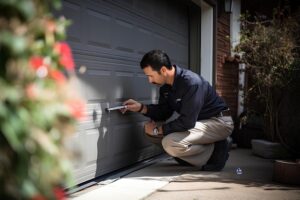
Professional installers bring calibrated tools and can complete the job faster. They will also adjust tracks springs and openers to ensure the door lands squarely. The labour charge ranges from one hundred and fifty to four hundred dollars depending on region and door size but many owners find the guarantee and compliance certificate worth the price.
Maintenance schedule that really works
A prevention program keeps minor wear from becoming major damage. Clean the seal and threshold every month by wiping with mild detergent and water. Inspect for cracks or flattening. Twice a year lubricate rollers hinges and springs with silicone based spray keeping oil away from the floor. Check that anchor bolts remain tight and that the opener travel limits stop the door without slamming.
After every major storm perform a water test. Close the door then spray a hose against the outside for five minutes starting at the bottom edge. Look for seepage. If water penetrates adjust or replace the seal immediately. Keeping a simple logbook of inspection dates and findings provides evidence of due diligence and may help with warranty claims.
Cost insights and return on investment
Protective measures cost far less than repairing a damaged slab. Recent surveys of one hundred Australian households by Sand R Garage Door Services placed the average repair bill after water damage at two thousand dollars. An epoxy recoat alone averages one hundred dollars per square metre. In contrast a full set of high grade seals and a threshold for a double door rarely exceeds six hundred dollars including labour. When amortised over a ten year lifespan that equates to just five dollars per month which is cheaper than a single takeaway coffee.
Insurance policies sometimes cover storm damage but many exclude rising water that enters through an opening. A small investment now therefore prevents an uninsured loss later. Energy savings also add up because a tight seal reduces drafts that can cool adjoining living rooms in winter.
Penalties and legal risks if you cut corners
Building authorities expect any modification to remain in line with the NCC and AS five thousand and seven. If you replace a door or its operating gear without a permit and an inspector finds that it scrapes the slab you could face enforcement. Fines differ by jurisdiction but range well into four figures. Worse still an insurance assessor can decline a claim if the door installation contributed to water entering the property. Some lenders even require evidence of compliance before approving refinancing. Being proactive therefore avoids double pain at inspection or claim time.
Real world case study Queensland cyclone season
In late twenty twenty four a homeowner in Cairns replaced an ageing roller door with a wind rated sectional model but skipped the threshold to save money. Cyclone Jasper then struck the coast. Horizontal rain entered under the new door soaking the garage for six hours. The polished slab delaminated within weeks costing three thousand four hundred dollars to resurface. By contrast a neighbour who had fitted both a fifteen millimetre rubber threshold and an EPDM bottom seal reported no water ingress despite losing power and leaving the door shut for the same period. The combined cost of those protective items had been three hundred and twenty dollars.
Frequently asked questions
What is the best seal for a concrete floor in a coastal suburb
EPDM bottom seals coupled with a ten millimetre PVC threshold offer the best blend of salt resistance and flexibility
How long does a threshold adhesive take to cure in winter
Most polymer adhesives reach full strength in twenty four hours at fifteen degrees but allow forty eight hours if temperatures dip below ten
Will a high threshold interfere with my car exhaust
A fifteen millimetre strip generally clears standard sedans and four wheel drives but always measure ground clearance before purchase
Does house insurance cover floor damage from a blown seal
Policies vary yet many exclude slow leaks or water that seeps under doors so check the wording carefully
Can I paint over a threshold to match my floor flake colour
Yes lightly scuff the surface then apply a compatible primer and polyurethane top coat following manufacturer advice
How often should a certified installer service a garage door
Annual servicing is recommended especially in high wind or coastal zones where salt accelerates corrosion
My driveway now slopes toward the house after subsidence can I still protect the floor
Install a trench drain outside the threshold and connect it to stormwater then add a high threshold inside to form a secondary barrier
What is the average permit cost for a door replacement in Victoria
Council fees vary but most fall between one hundred and two hundred dollars plus the cost of a registered building surveyor
Are brush seals worth the extra money
Yes they prevent fine dust and insects entering which protects both floor coatings and stored belongings
Can I claim protective seal installation as a home improvement for tax purposes
Owner occupiers usually cannot but investors may add it to the capital works schedule seek professional advice
By following the guidance above Australian homeowners can keep their garage floors pristine for decades. A small outlay on quality materials backed by regular maintenance delivers peace of mind compliance with building laws and a garage that stays dry no matter what the weather unleashes.